On-grid solar systems offer numerous benefits, including reduced electricity bills, lower carbon footprint, and the ability to earn credits through net metering. They are also relatively easy to install and maintain, making them a cost-effective and reliable energy solution.
Cost-Effectiveness of On-Grid Solar
Financial Incentives and Policies
Domestic Usage only
Save 95% Power Consumption
| Suitable Rooftop Solar Plant Capacity | Subsidy Support |
|---|---|
| 1-2KW | ₹30,000/- to ₹60,000/- |
| 2-3KW | 60,000/- to ₹78,000/- |
| Above 3 KW | 78,000/- |
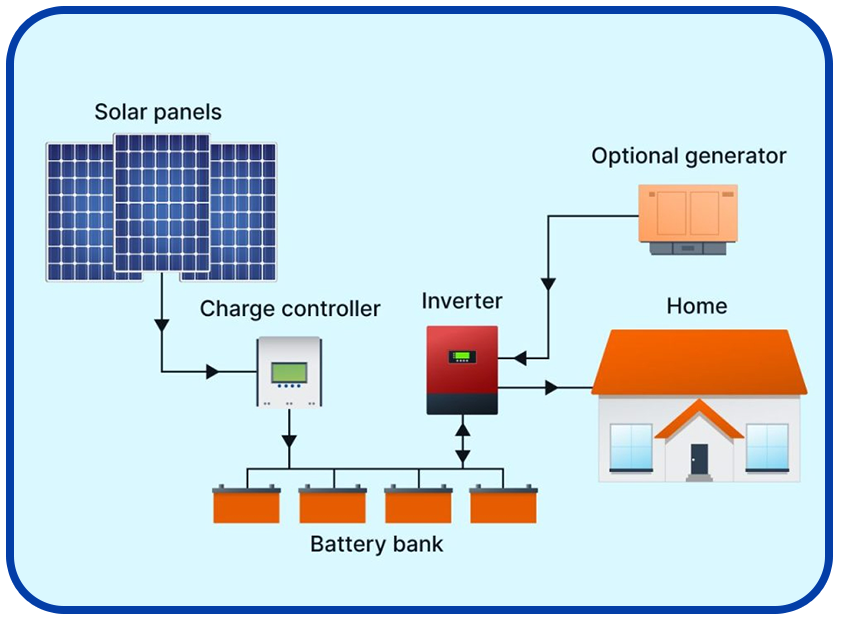
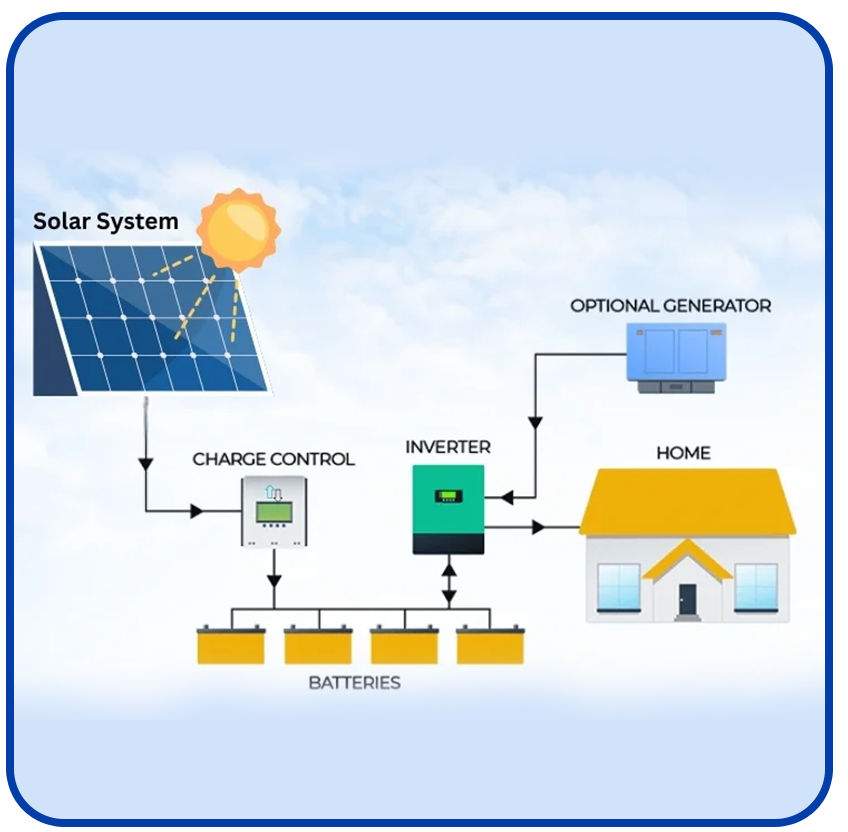
A stand-alone or off-grid solar system is not connected to the grid but uses a storage battery to store the electricity generated. Your solar panel system will produce more electricity during the day than your home could consume.
Energy independence
Renewable energy source
Reduced electricity bills
Suitable for remote areas
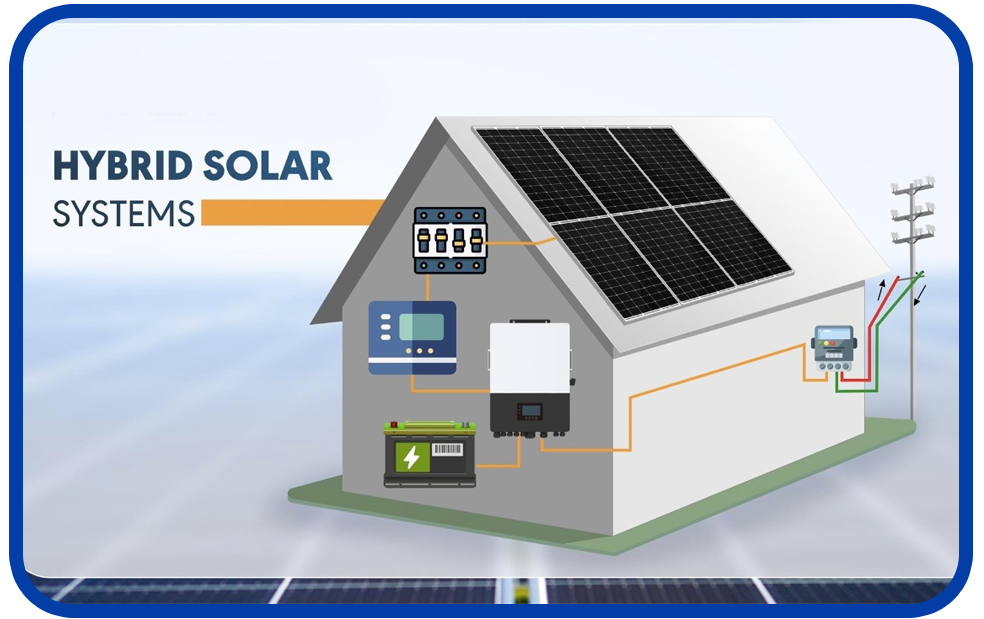
A solar hybrid system is a renewable energy system that uses solar photovoltaic (PV) panels to generate clean energy to power your home. A hybrid solar system intelligently switches between using solar power, battery storage and grid power.
60-80% Power Savings
Suitable for Hospital, Medical, Shops that can run Day time only
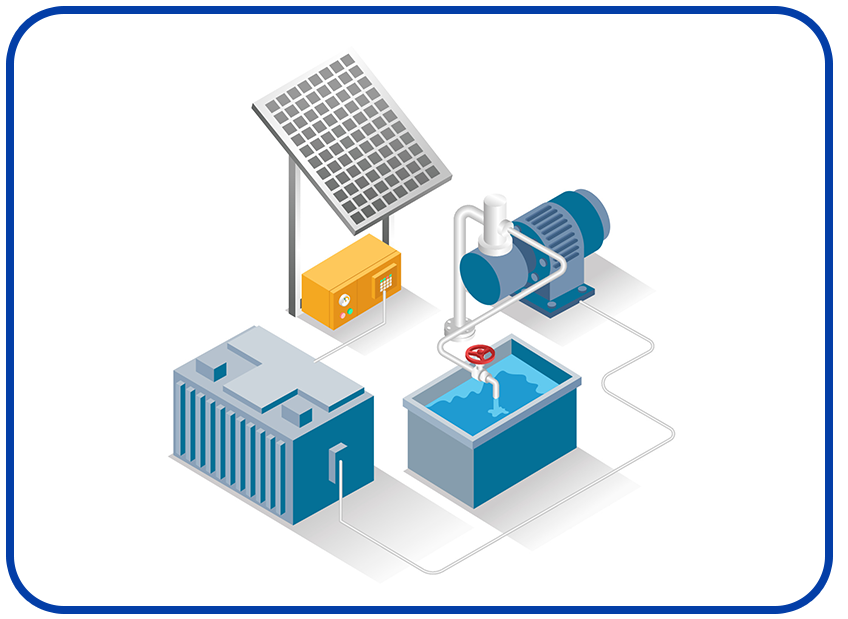
Cost savings, environmental friendliness, and reliability. They utilize free sunlight, eliminating fuel costs and reducing electricity bills. Solar pumps are also eco-friendly, emitting no greenhouse gases.